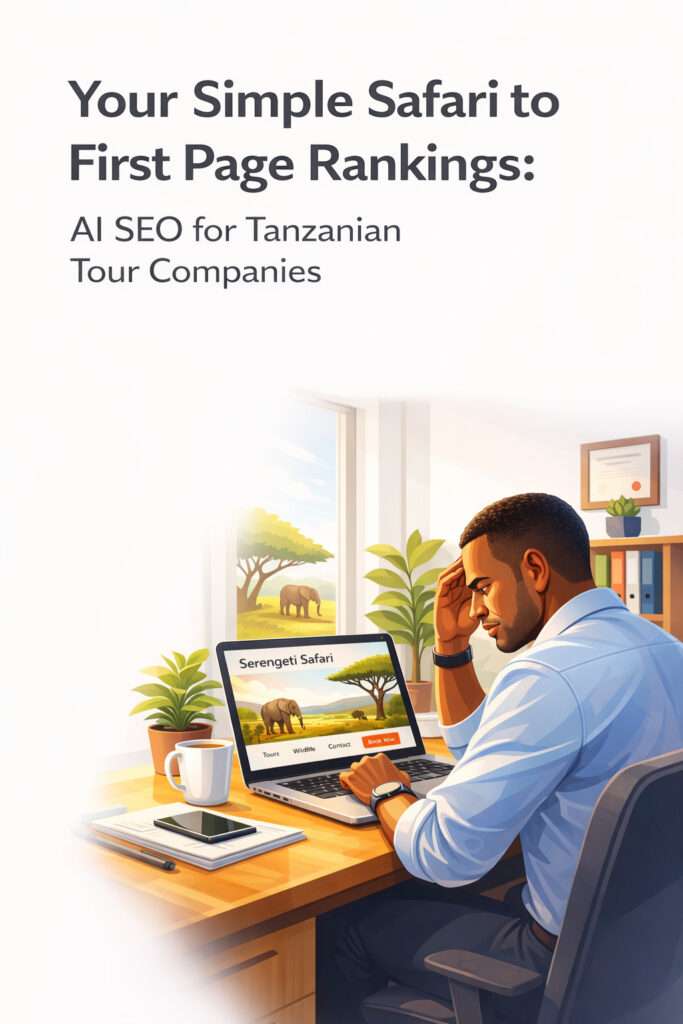
A Clear Way to Fix Your Tanzania Tour Company’s Online Reach
Right now, a traveler dreams of their Kilimanjaro summit. They imagine their first Serengeti sunset. Then, they open Google and search. But does your Tanzania tour company appear? Or are you invisible? You might be lost behind bigger brands and expensive ads.
You know the frustration. Your phone rings, but it’s another agent demanding a commission. Your incredible service gets bundled and resold. This erodes your margins. Direct bookings feel sporadic. So, you have less control and less profit. You also face more uncertainty.
However, there is a clear path forward. It doesn’t require a massive budget. Instead, it demands a strategic shift. The solution is mastering SEO for tour companies in Tanzania. This system puts your business directly in front of international travelers. It works at the exact moment they decide. Let’s talk about how to fix your reach.
Why SEO is Essential for Tanzanian Tour Companies
Think about your own habits. You search online for a reliable service. Travelers do the same. They type phrases like “best Serengeti migration safari.” Others search for “reliable Kilimanjaro operator 2025.” Your goal is to be their first answer.
SEO (Search Engine Optimization) aligns your website with these searches. Therefore, when done right, it delivers consistent visitors. These are high-intent visitors coming directly to you. This method outperforms social media posts. It also beats costly pay-per-click campaigns. Why? Because it builds a permanent asset. That asset is your website’s ranking. You can start with SEO services in Tanzania to get professional help.
The opportunity for Tanzanian operators is especially rich. Global demand for our destinations is strong. Yet, local competition in search results is often manageable. So, a focused tour company SEO strategy can dominate these searches. The result is powerful. You reduce dependency on overseas agents. Then, you keep the full profit from each booking. Finally, you build a brand that travelers trust before they even inquire.
Ultimately, SEO is not a technical mystery. It’s modern business sense. It ensures that when the world searches for Tanzania’s beauty, they find your door first.
Keyword Research for Safari and Tour SEO in Tanzania
Effective SEO for tour companies in Tanzania starts with understanding your clients’ language. You must think like a traveler planning their trip. This process is called keyword research. It forms the foundation of everything that follows.
First, target core service phrases. These are high-value terms like “Serengeti safari packages.” Others include “Kilimanjaro climbing tours” or “Zanzibar beach holiday.” They are competitive, but ranking for them is crucial. Next, you must include location-specific keywords. For example, use “safari company in Arusha” or “tour guide in Moshi.” These capture travelers already in Tanzania or planning logistics.
Do not forget long-tail phrases. These are more specific and less competitive. They also show high purchase intent. Think of “7-day Wildebeest Migration camping safari.” Another example is “family-friendly luxury lodge Tarangire.” Such phrases match a detailed traveler’s dream perfectly. They are easier to rank for. Plus, they convert visitors into bookings remarkably well.
Here is a practical action list for your keyword strategy:
- Map Your Services: List every tour, location, and activity you offer. Examples include Ngorongoro Crater day trips and Ruaha walking safaris.
- Use Free Tools: Google’s “People also ask” box is a goldmine. Also check the “Related searches” at the bottom of the results page.
- Analyze Competitors: See which phrases your successful rivals use. Look at their page titles and blog posts.
- Prioritize: Focus on 5-10 primary phrases first. Then build content around dozens of related secondary terms.
This research guides your website content. It ensures you speak the same language as your future clients. That is the first step to being found.
Master Local SEO for Tanzania Tours
For a tourism business, location is everything. Your travel agency SEO strategy must reflect this. This is where Local SEO shines. It connects your physical business to online searchers in your area. The most critical tool is your Google Business Profile (GBP).
Imagine a traveler lands at Kilimanjaro Airport. They search “safari companies near me.” A complete GBP makes you appear on the map. It shows your photos, reviews, and contact details. To optimize it, you must follow these steps:
- Use your exact business name, address, and phone number.
- Select the correct categories. Good examples are “Tour Operator” and “Safari Tour Agency.”
- Upload stunning, original photos. Show your team, vehicles, and happy clients.
- Collect and respond to genuine customer reviews.
- Post regular updates about offers, new itineraries, or travel tips.
Beyond GBP, you need local citations. These are listings on other directories. For Tanzania, ensure you are on TripAdvisor and SafariBookings. Also list with local tourism boards. Consistency is key. Your name, address, and phone number must be identical everywhere. This tells Google you are a legitimate and stable business.
Finally, weave location into your website content. Create service pages for each area. For instance, have a dedicated page for “Arusha Day Trips.” Make another for “Zanzibar Spice Tours.” Use keywords like “safari SEO in Tanzania” within these pages. This powerful combination makes you the obvious choice. It works for travelers on the ground.
On-Page and Technical SEO Tactics for Travel Agencies
Now, ensure your website is built for visitors and search engines. This involves on-page and technical SEO. First, look at your page titles and meta descriptions. These are the previews in Google’s results. They must include your key phrases. They also need to compel clicks.
For example, a weak title is “Home – ABC Tours.” A strong one is “Serengeti Safari Specialists | ABC Tours | Award-Winning Guides.” See the difference? The second one uses keywords. It also sells the benefit immediately.
Next, site speed is non-negotiable. Travelers might search with slow internet on the road. A slow site makes them leave. So, use tools like Google PageSpeed Insights. Also, compress your images. Then, choose a reliable local hosting provider. Your site must also be flawless on mobile phones. Over half of all travel searches happen on mobile.
Your content structure matters greatly. Break text with clear subheadings like H2 and H3. Use bullet points for itineraries or packing lists. Most importantly, include clear booking links. For instance, within a blog post about “The Great Migration,” add a button saying “Book Your Migration Safari.” This guides the visitor toward conversion.
Finally, use internal linking. Link relevant pages to each other. If you mention “Ngorongoro Crater” in a blog, link that text to your Ngorongoro tour page. This keeps visitors on your site longer. It also shows Google how your content connects. A well-structured and fast website is trustworthy. Then, travelers will feel confident booking with you.
Content and Off-Page Strategies to Outrank Competitors
Content is your most powerful tool for tour company SEO. It attracts links and engages visitors. It also answers every traveler question. Start with a foundational blog. Write detailed guides like “When to Climb Kilimanjaro: Month-by-Month Guide.” Another good topic is “What to Pack for a Tanzanian Safari.”
Create dedicated and in-depth pages for your key tours. Go beyond a simple list. Tell the story. Include sample itineraries and wildlife highlights. Add accommodation options and traveler FAQs. Also, embed stunning videos and galleries. This comprehensive content satisfies visitors. As a result, they stay longer and are more likely to book. Google rewards this depth with higher rankings.
Off-page SEO, primarily backlinks, is your vote of confidence from other websites. Earning links from travel bloggers boosts your authority. Links from tourism associations or news sites also help. You can achieve this by creating shareable resources. For example, publish a unique “Tanzania Safari Cost Calculator.” A detailed migration route map also works well. Then, journalists and bloggers will link to it as a reference.
Remember, SEO is not a one-time task. You need ongoing maintenance. Conduct quarterly audits of your site speed. Also check your keyword rankings. Update old blog posts with new information. Fresh content signals vitality. In the competitive landscape of 2025-2026, this consistent effort keeps you ahead. It turns a one-time visitor into a lifelong client. They become your biggest fan.
This is the clear way. By implementing these steps, you seize control. You stop waiting for agents. Instead, you build a direct pipeline. It connects you to travelers actively searching for your exact experiences. Your online reach expands. Then, your bookings increase. Finally, your business transforms.
Frequently Asked Questions (FAQ)
- 1. What exactly is SEO for a tour company in Tanzania?
SEO (Search Engine Optimization) optimizes your website. It helps you rank higher in Google search results. For a Tanzanian tour operator, this means using specific keywords. It also involves local business listings and quality content. Then, international travelers find you directly when searching for safaris or Zanzibar holidays. - 2. How long does it take for SEO to bring direct safari bookings?
SEO is a long-term strategy. Typically, you may see initial improvements in 3-6 months. However, substantial and consistent direct bookings often take 6-12 months of effort. The key is patience and consistency. You are building a durable online asset. - 3. What are the most important local keywords for my Tanzania travel agency?
Focus on a mix. Include your core services like “Serengeti safari.” Also use your locations, such as “tour operator in Arusha.” Then, add specific traveler phrases like “family safari Tanzania.” Use the research methods in the Keyword Research section. - 4. Is Google Business Profile really that important for safari companies?
Absolutely. It is critical for Local SEO. A complete and active profile helps you appear in “near me” searches. It also shows you on Google Maps. Travelers on the ground use it to find contact details. They see photos and read reviews. This makes it a direct booking conduit. - 5. My website is slow. How does this affect my bookings?
Site speed dramatically impacts bookings. A slow site frustrates potential clients. This leads them to leave and increases your “bounce rate.” It also hurts your Google ranking. So, optimizing images and using good hosting is essential. This was mentioned in the Technical SEO section. - 6. What kind of content should I write to attract more clients?
Create practical and in-depth guides. They should answer traveler questions. Examples include detailed itineraries and packing lists. Seasonal guides like “Best Time for the Migration” also work well. This content establishes your expertise. It also ranks for valuable search phrases. - 7. How can I get other websites to link to my tour company site?
Create exceptional and link-worthy content. Examples are unique research or stunning visual guides. Comprehensive tools also work well. Partner with reputable travel bloggers for honest reviews. Also, ensure you are listed accurately on tourism directories like SafariBookings. - 8. Can I do SEO myself, or do I need to hire an agency?
You can implement the foundational steps yourself using this guide. However, an agency helps with advanced strategy and technical fixes. They also aid with sustained link-building. So, look for agencies with proven case studies in East African tourism. - 9. How do I track if my SEO efforts are working?
Use free tools like Google Search Console and Google Analytics. Track key metrics like your keyword rankings. Also monitor your organic website traffic. Most importantly, track inquiries and bookings from organic search. - 10. Should I stop using online travel agents (OTAs) if I focus on SEO?
Not necessarily. A balanced approach is wise. Use OTAs for initial visibility and cash flow. Simultaneously, use SEO to build your direct booking channel. Over time, direct bookings will grow. Then, you can reduce reliance on OTAs and improve your profit per booking.