
How to Hire SEO Services Expert Tanzania:
Grow Your Tour Business (Simple Steps, Local Pricing, Red Flags)
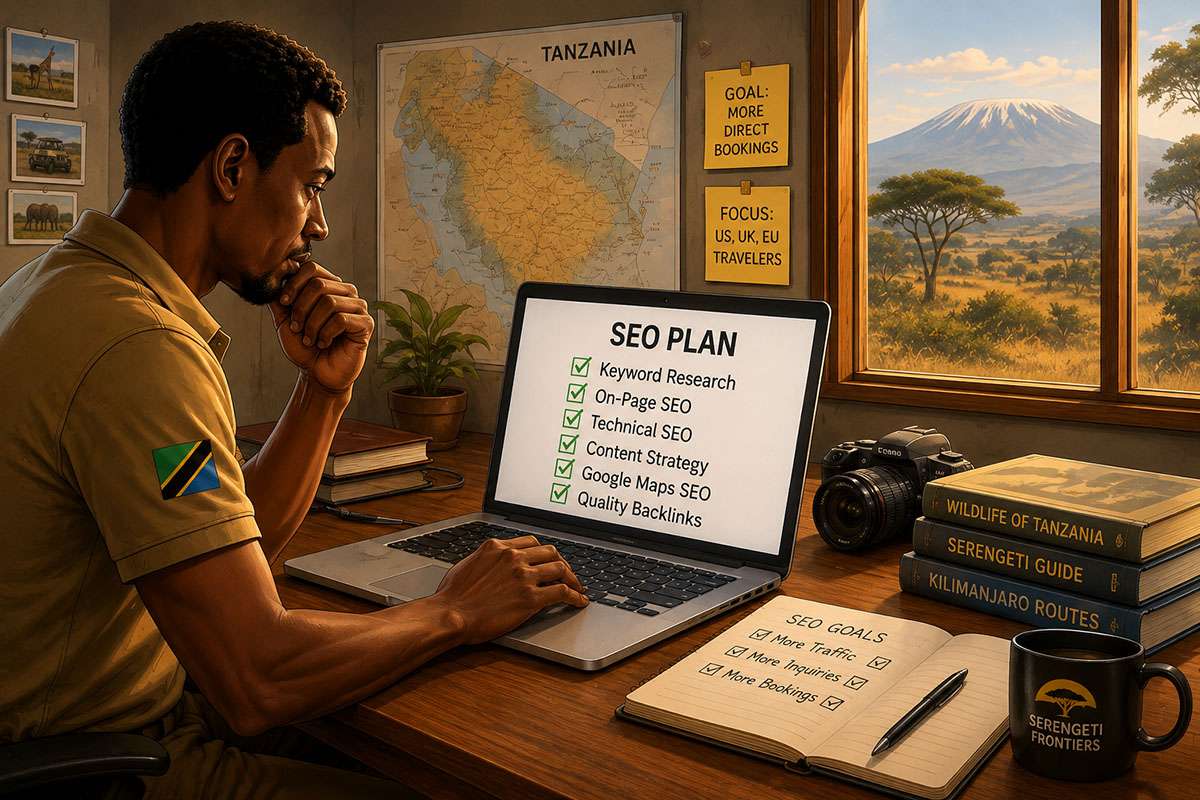
If you run a safari, Kilimanjaro, or Zanzibar tour company, you know the feeling: one week your website barely gets a trickle of direct enquiries, while your competitor suddenly fills their next group with travelers who found them on Google. More “best SEO experts” appear every day, all sounding convincing—yet few actually deliver the bookings that matter when you want to hire SEO services expert Tanzania. What do you really need to check? How much should you pay? And how do you spot the difference between empty promises and real results, especially for tourism? In this guide, I’ll walk you—operator to operator—through every gap missing on most advice sites. You’ll get the price realities, smart vetting steps, red flags, and honest advice that suit tour companies here, not overseas theory. It takes some conscious effort, but direct bookings start with hiring right—the first time.
The right hiring process
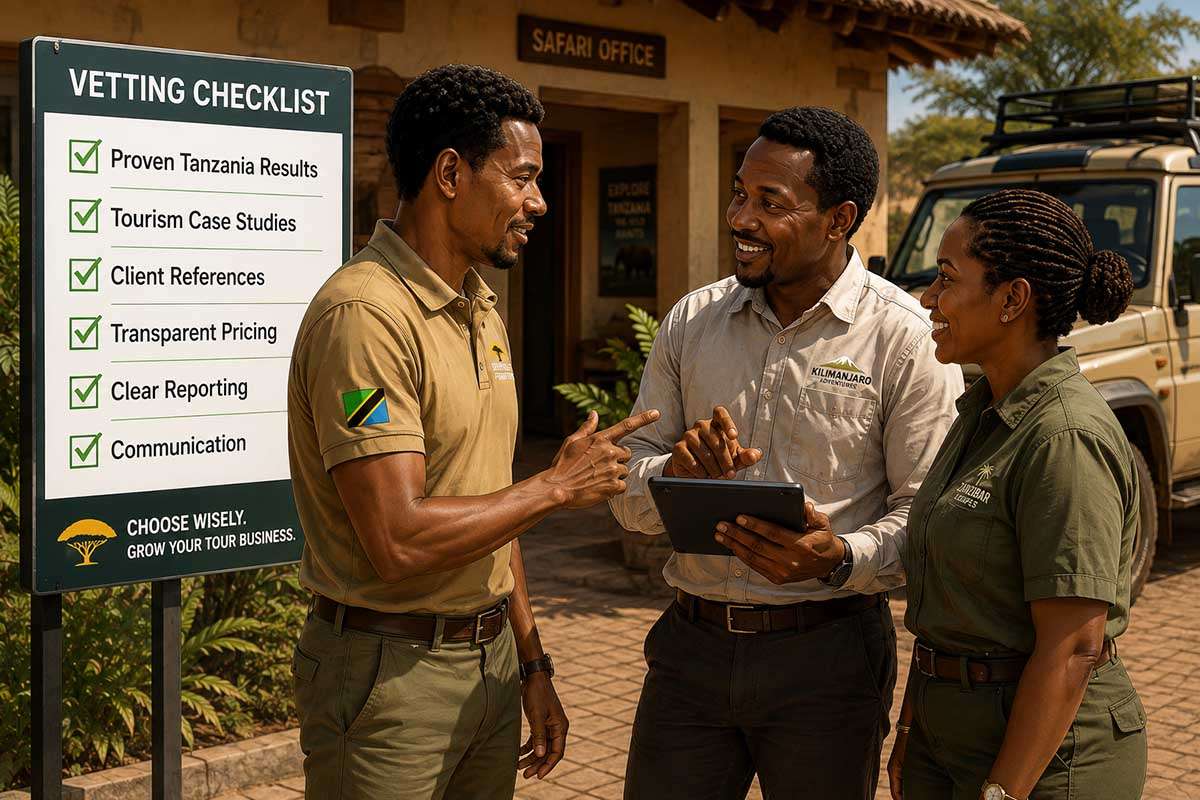
Let’s be real: most operators who “try SEO” just pick a name from a directory, hope for the best, and wonder why nothing changes. Instead, step back and use a short, structured hiring sequence. First, clarify your goal—for example: “increase direct bookings from US travelers searching ‘Tanzania safari’ on Google.” Next, shortlist SEO providers with proven, Tanzania-specific results. Don’t settle for a generic “top list.” Ask every candidate for real local case studies—not just foreign references or before/after screenshots from three years ago. Search their clients’ names on Google Maps and check for yourself. Finally, before you sign, always speak to at least one past client in the same sector—a Kilimanjaro operator should talk with another, not a Dar supermarket owner. Yes, it may take a few extra days, but you’ll weed out 90% whose promises end in silence or spam.
What ‘SEO specialist in Tanzania’ really means
Here’s a truth most directories skip: not every seo specialist in Tanzania fits every business model. In tourism, your edge isn’t just “rank for keywords”—it’s showing clearly on Google Maps, TripAdvisor, and in location-based search results. Some SEO experts specialize in local results (think Serengeti Digital Agency in Mugumu, who focus on local map rankings for tour offices). Others, like WATABE DIGITAL, excel at complex technical fixes—good if your site needs a major rebuild for speed or mobile use. Then there are branding-focused agencies with deep social media skills (Lucent Technologies, for instance), who suit companies using WhatsApp or Facebook for bookings. The right “specialist” is the one with a recent, sector-matching win—not just anyone with “SEO” on their card.
What real results look like
Too many operators hire a “specialist” and, months later, see zero direct booking growth. Why? Because results get lost in fluff—website visits, impressions, or pretty graphs with no link to your bottom line. Before you commit, ask exactly what results the expert has delivered for a Tanzanian tourism business in the last 18 months. For example: after a mid-sized Kilimanjaro tour company had their Google Maps profile and local page content optimized, their direct enquiry form submissions grew by 45% in eight months (per real local case studies). Get that level of truth from your SEO candidate. If you hear “we ranked a Dar restaurant for ‘pizza delivery’,” thank them and move on—that’s not your game.
Freelancer or agency: which fits you?

Should you trust a solo freelancer, or do you need a formal agency? There’s no universal answer—here’s how it breaks down for Tanzanian tour operators. Freelancers (charging between $50 and $120 per hour) can be a great fit for clear, short projects: speeding up your site, or optimizing your Google Maps listing. They’re usually flexible on price and quick to reach, but they can lack depth on bigger technical or content challenges. Agencies, by contrast, start at ~$1,000 for package deals but will often work with growing operators from ~$500/month for ongoing SEO. Agencies pull in more skills—content writers, tech folks, link builders—which matters for full-site overhauls or multi-national search targeting. For “just get me on Google,” a freelancer can work; for “grow direct from the UK and US,” an agency’s broader toolbox earns its keep.
Pricing—what you should expect
Here’s what the directories don’t tell you: in Tanzania, a basic engagement with a quality freelancer runs $50–$120/hour. That’s for focused tasks—site audits, speed fixes, or Google Maps help. Most safari operators get real value from ongoing monthly support. For SMEs like yours, expect $500 per month as a fair floor for real deliverables, with larger agencies quoting upwards from $1,000 for complex projects. Agencies quoting “a few bucks per week” are either cutting corners or sending work offshore (where you’ll see little local lift). If your site is small, target the $500–$1,000/month range—any more, and you’re buying bells and whistles you likely won’t use. Beware packages promising “#1 ranking in days” at bargain rates—those shortcuts often land your site in trouble later.
Want to know why travelers aren’t finding your site?
Get a free SEO review of your tour website from Teknomira — we’ll show you exactly what’s holding your rankings back and how to fix it.
Red flags to watch for
Let’s talk about what not to buy. If you see any “SEO expert” promising “number one overnight,” walk away—it almost always means black-hat tricks. In Tanzania, it’s still common to see so-called pros stuff pages with endless repetitive keywords, cloak text, or buy bulk links from spammy sites. These tricks may budge your site briefly, but Google quickly penalizes you—result: vanish from the map just as you start gaining ground. Another classic red flag: refusal to explain exactly what they’ll change (“proprietary secrets” is a nonsense answer). If they won’t share a local case study, or speak plainly about their methods, don’t test your luck with your business’s reputation.
How to check local case studies
It isn’t enough for an SEO expert to say they “have experience with Tanzanian companies.” Before you hire, ask to see two things: 1) the business name(s) of local clients they’ve ranked in the past 18 months, and 2) specific before-and-after search results you can verify independently—for example, a Google Maps search for “Zanzibar tour operator” where their client now appears in the top three local results. If they share links, open them yourself and search from a Tanzanian IP (or ask a friend based here to double-check). It’s a simple but powerful filter—most “experts” won’t pass. Operators who do pass tend to be the ones you hear about for years afterward.
What questions to ask before hiring
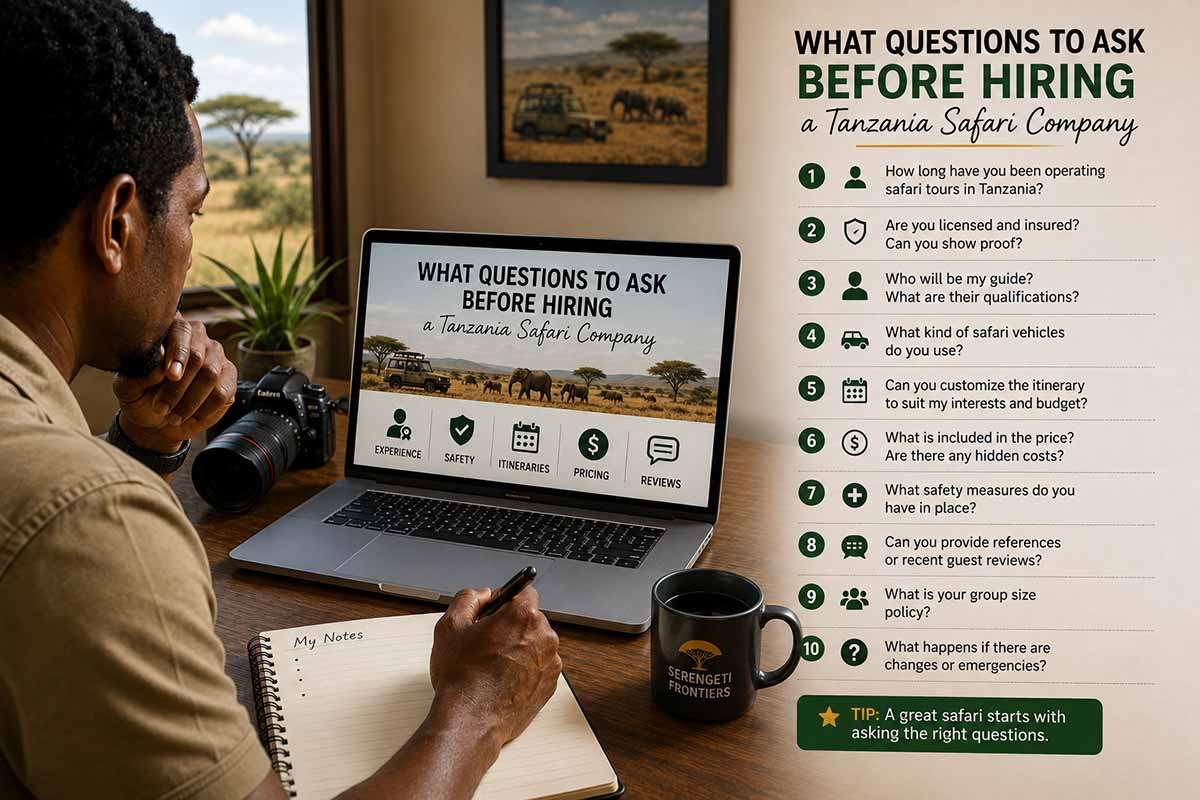
Forget glossy proposals—in the interview, a few pointed questions quickly reveal who you’re really dealing with. Ask: “Which Tanzanian tourism companies have you helped in the last year, and can I speak with them?” “How do you handle changes in Google’s ranking system—can you give an example from 2023 or 2024?” “If my rankings drop, what backup plan do you have?” Most genuine experts will have direct, Tanzanian examples (like how they helped a Mugumu operator recover local rankings after a Google Maps update). If answers drift, stay vague, or brag about “clients worldwide,” keep looking. Honest expertise always leaves a trace—ask until you see it clearly.
Matching SEO tactics to your market
Here’s another gap directory sites skip: as a tour operator, “standard” SEO isn’t enough. You need local SEO—that means optimizing your Google Business Profile, earning real local reviews, and showing up for “safari Arusha” or “climb Kilimanjaro” map-pack searches. A retail shop or tech startup might benefit more from broader content or e-commerce tactics, but for tourism, it’s local that drives direct bookings. When vetting potential hires, press them on their specific plan for mapping, reviews, and location cues (down to embedding your precise region in page titles and descriptions). Real pros know the difference—ask until you’re confident yours does too.
Understanding contract terms
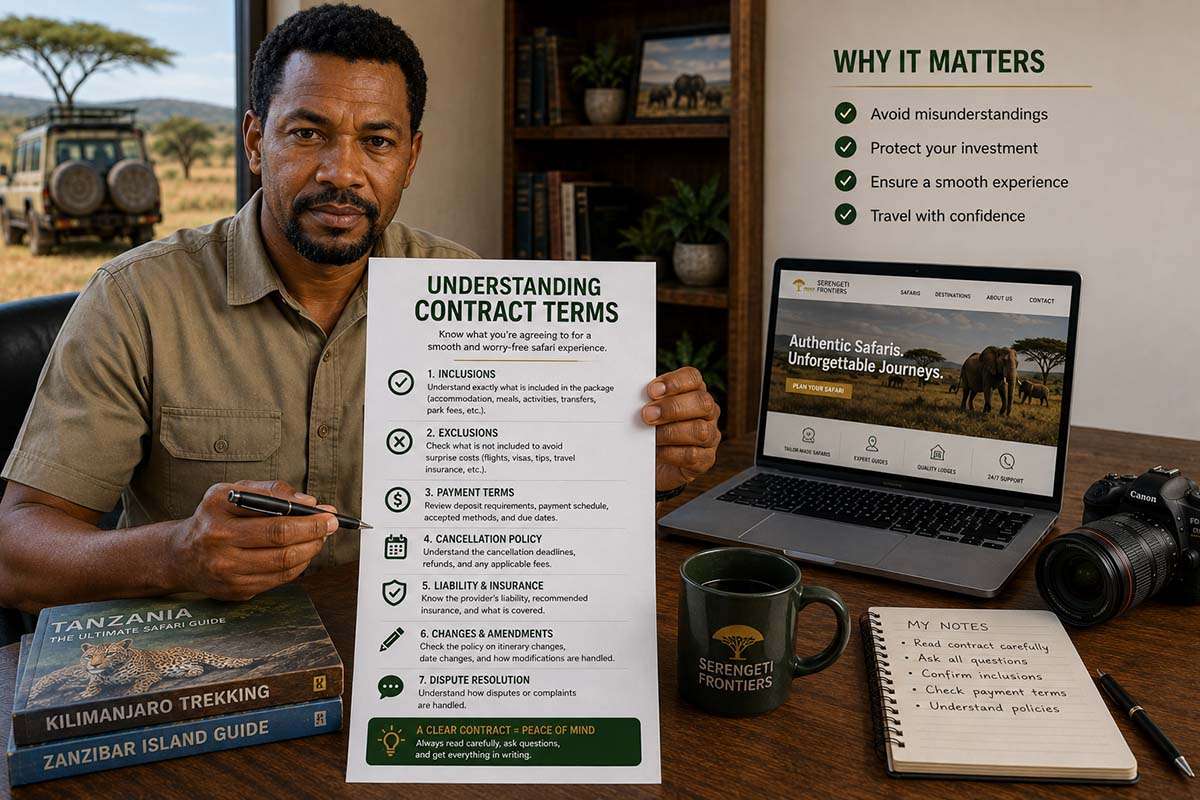
Before you sign, make sure you’re clear—on both sides—what exactly you’re paying for. Good SEOs will detail deliverables (e.g., local map ranking, technical fixes, content plans), timeframes, and ongoing communication rhythms (like monthly reporting on keyword movement and direct enquiry counts). Watch for long lock-in clauses—many agencies push 6–12 month minimums, but genuine pros for SMEs and tour operators are often open to 3–6 month terms, so you aren’t trapped if it’s not working. Upfront, clarify if results are tracked via actual enquiry forms and phone calls, not just website “traffic.” Results you can see on your phone—new bookings, not just page views—that’s what counts.
FAQ
- How much does it cost to hire a Tanzanian SEO expert?
For a freelancer, expect $50–$120 per hour for tourism-relevant tasks. Quality monthly SEO packages for SMEs start around $500, while full-service agencies may begin at $1,000+ monthly depending on complexity. - Should I pick a freelancer or an agency?
Freelancers suit small or one-off projects and are more flexible on price; agencies offer broader skills and ongoing service but start higher in price, usually making sense for longer-term, multi-channel growth. - What are the key red flags to avoid?
Avoid anyone promising “instant rankings,” using keyword stuffing, buying links in bulk, or declining to share real local case studies. Transparency and Tanzania-specific outcomes are non-negotiable. - How do I know if an SEO expert works for Tanzanian tourism?
Ask for local examples less than 18 months old, check their clients’ rankings on Google Maps, and confirm by talking to a former client with a similar business. - Is Google Maps optimization crucial for safari companies?
Yes—local SEO and Maps rankings directly boost walk-ins, local reputation, and the likelihood an international traveler discovers you during trip planning. - How quickly should I expect results?
Usually, you should see some changes in Maps rankings or enquiry volume within 2–3 months; significant traffic or booking increases often take 3–6 months of sustained SEO effort. - What contract terms are normal for SEO in Tanzania?
3–6 month rolling agreements with monthly reporting are common for operators; avoid long lock-ins unless you’ve seen quality proof of performance. - What exactly will good SEOs do for my tour business?
They optimize local listings, improve mobile site usability, strengthen relevant content, and build trusted local links—always aligning their tactics to the needs of travel searchers and Google Maps. - What about “cheap” SEO offers online?
Most too-good-to-be-true deals rely on spam or shortcuts, which may work briefly but almost always lead to penalties or lost rankings long-term. Always prioritize proven, real-world success in Tanzania. - How do I track real results from SEO?
Monitor increases in direct inquiry form submissions, local visibility (map pack), and actual bookings—not just site visit counts or search impressions. Trust measures that impact your business’s bottom line.